서브메뉴
검색
상세정보
Seven NoSQL Databases in a Week : Get up and running with the fundamentals and functionalities of seven of the most popular NoSQL databases
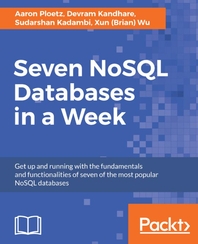
Seven NoSQL Databases in a Week : Get up and running with the fundamentals and functionalities of seven of the most popular NoSQL databases
상세정보
- 자료유형
- 전자책(국외)
- 미국국회도서관 청구기호
- QA76.9.D26-.S484 2018eb
- 자관 청구기호
- 기본표목-개인명
- 표제와 책임표시사항
- Seven NoSQL Databases in a Week : Get up and running with the fundamentals and functionalities of seven of the most popular NoSQL databases / Xun (Brian) Wu, Sudarshan Kadambi, Devram Kandhare, Aaron Ploetz.
- 발행, 배포, 간사 사항
- 형태사항
- 1 online resource (308 pages)
- 일반주기
- Table of ContentsIntroduction to NoSQL DatabasesMongoDBNeo4jRedisCassandra HBaseDynamo DBInfluxDB.
- 내용주기
- 완전내용Title Page; Copyright and Credits; Dedication; Packt Upsell; Contributors; Table of Contents; Preface; Chapter 1: Introduction to NoSQL Databases; Consistency versus availability; ACID guarantees; Hash versus range partition; In-place updates versus appends; Row versus column versus column-family storage models; Strongly versus loosely enforced schemas; Summary; Chapter 2: MongoDB; Installing of MongoDB; MongoDB data types; The MongoDB database; MongoDB collections; MongoDB documents; The create operation; The read operation; Applying filters on fields.
- 내용주기
- 완전내용Applying conditional and logical operators on the filter parameterThe update operation; The delete operation; Data models in MongoDB; The references document data model; The embedded data model; Introduction to MongoDB indexing; The default _id index; Replication; Replication in MongoDB; Automatic failover in replication; Read operations; Sharding; Sharded clusters; Advantages of sharding; Storing large data in MongoDB; Summary; Chapter 3: Neo4j; What is Neo4j?; How does Neo4j work?; Features of Neo4j; Clustering; Neo4j Browser; Cache sharding; Help for beginners; Evaluating your use case.
- 내용주기
- 완전내용Social networksMatchmaking; Network management; Analytics; Recommendation engines; Neo4j anti-patterns; Applying relational modeling techniques in Neo4j; Using Neo4j for the first time on something mission-critical; Storing entities and relationships within entities; Improper use of relationship types; Storing binary large object data; Indexing everything; Neo4j hardware selection, installation, and configuration; Random access memory; CPU; Disk; Operating system; Network/firewall; Installation; Installing JVM; Configuration; High-availability clustering; Causal clustering; Using Neo4j.
- 내용주기
- 완전내용Neo4j BrowserCypher; Python; Java; Taking a backup with Neo4j; Backup/restore with Neo4j Enterprise; Backup/restore with Neo4j Community; Differences between the Neo4j Community and Enterprise Editions; Tips for success; Summary; References ; Chapter 4: Redis; Introduction to Redis; What are the key features of Redis?; Performance; Tunable data durability; Publish/Subscribe; Useful data types; Expiring data over time; Counters; Server-side Lua scripting; Appropriate use cases for Redis; Data fits into RAM; Data durability is not a concern; Data at scale; Simple data model.
- 내용주기
- 완전내용Features of Redis matching part of your use caseData modeling and application design with Redis; Taking advantage of Redis' data structures; Queues; Sets; Notifications; Counters; Caching; Redis anti-patterns; Dataset cannot fit into RAM; Modeling relational data; Improper connection management; Security; Using the KEYS command; Unnecessary trips over the network; Not disabling THP; Redis setup, installation, and configuration; Virtualization versus on-the-metal; RAM; CPU; Disk; Operating system; Network/firewall; Installation; Configuration files; Using Redis; redis-cli; Lua; Python; Java.
- 요약 등 주기
- 요약This book will help you understand the fundamentals of seven of the most popular NoSQL databases. You will see how the functionalities of each of them differ, while still giving you the same result - a database solution with speed, high performance, and accuracy.
- 주제명부출표목-일반주제명
- 주제명부출표목-일반주제명
- 주제명부출표목-일반주제명
- 주제명부출표목-일반주제명
- 주제명부출표목-일반주제명
- 주제명부출표목-일반주제명
- 주제명부출표목-일반주제명
- 주제명부출표목-일반주제명
- 주제명부출표목-일반주제명
- 부출표목-개인명
- 부출표목-개인명
- 부출표목-개인명
- 기타형태저록
- Print version Wu Xun (Brian) Seven NoSQL Databases in a Week : Get up and running with the fundamentals and functionalities of seven of the most popular NoSQL databases
- 전자적 위치 및 접속
- 링크정보보기
MARC
008180412s2018 enk gs 000 0 eng d■001MOKWON01237518
■003OCoLC
■00520190128131459
■006m d
■007cr |||||||||||
■008180412s2018 enk go 000 0 eng d
■019 ▼a1030819737
■020 ▼a9781787127142▼q(electronic bk.)
■020 ▼a1787127141▼q(electronic bk.)
■020 ▼z9781787288867▼q(print)
■035 ▼a1775077▼b(N$T)
■035 ▼a(OCoLC)1032114269▼z(OCoLC)1030819737
■037 ▼a9781787127142▼bPackt Publishing
■037 ▼a3D8B0313-F49F-4702-A543-F7F3F8E3F7AB▼bOverDrive, Inc.▼nhttp://www.overdrive.com
■040 ▼aNLE▼beng▼epn▼cNLE▼dNLE▼dEBLCP▼dMERUC▼dIDB▼dCHVBK▼dOCLCO▼dVT2▼dOCLCQ▼dOCLCO▼dTEFOD▼dOCLCQ▼dLVT▼dN$T▼dC6I▼dN$T
■049 ▼aMAIN
■050 4▼aQA76.9.D26▼b.S484 2018eb
■072 7▼aCOM▼x021000▼2bisacsh
■08204▼a005.743▼223
■090 ▼a전자도서
■1001 ▼aWu, Xun (Brian)▼eauthor.
■24510▼aSeven NoSQL Databases in a Week▼bGet up and running with the fundamentals and functionalities of seven of the most popular NoSQL databases▼cXun (Brian) Wu, Sudarshan Kadambi, Devram Kandhare, Aaron Ploetz.
■260 ▼aBirmingham▼bPackt Publishing▼c2018.
■300 ▼a1 online resource (308 pages)
■336 ▼atext▼btxt▼2rdacontent
■337 ▼acomputer▼bc▼2rdamedia
■338 ▼aonline resource▼bcr▼2rdacarrier
■500 ▼aTable of ContentsIntroduction to NoSQL DatabasesMongoDBNeo4jRedisCassandra HBaseDynamo DBInfluxDB.
■5050 ▼aTitle Page; Copyright and Credits; Dedication; Packt Upsell; Contributors; Table of Contents; Preface; Chapter 1: Introduction to NoSQL Databases; Consistency versus availability; ACID guarantees; Hash versus range partition; In-place updates versus appends; Row versus column versus column-family storage models; Strongly versus loosely enforced schemas; Summary; Chapter 2: MongoDB; Installing of MongoDB; MongoDB data types; The MongoDB database; MongoDB collections; MongoDB documents; The create operation; The read operation; Applying filters on fields.
■5058 ▼aApplying conditional and logical operators on the filter parameterThe update operation; The delete operation; Data models in MongoDB; The references document data model; The embedded data model; Introduction to MongoDB indexing; The default _id index; Replication; Replication in MongoDB; Automatic failover in replication; Read operations; Sharding; Sharded clusters; Advantages of sharding; Storing large data in MongoDB; Summary; Chapter 3: Neo4j; What is Neo4j?; How does Neo4j work?; Features of Neo4j; Clustering; Neo4j Browser; Cache sharding; Help for beginners; Evaluating your use case.
■5058 ▼aSocial networksMatchmaking; Network management; Analytics; Recommendation engines; Neo4j anti-patterns; Applying relational modeling techniques in Neo4j; Using Neo4j for the first time on something mission-critical; Storing entities and relationships within entities; Improper use of relationship types; Storing binary large object data; Indexing everything; Neo4j hardware selection, installation, and configuration; Random access memory; CPU; Disk; Operating system; Network/firewall; Installation; Installing JVM; Configuration; High-availability clustering; Causal clustering; Using Neo4j.
■5058 ▼aNeo4j BrowserCypher; Python; Java; Taking a backup with Neo4j; Backup/restore with Neo4j Enterprise; Backup/restore with Neo4j Community; Differences between the Neo4j Community and Enterprise Editions; Tips for success; Summary; References ; Chapter 4: Redis; Introduction to Redis; What are the key features of Redis?; Performance; Tunable data durability; Publish/Subscribe; Useful data types; Expiring data over time; Counters; Server-side Lua scripting; Appropriate use cases for Redis; Data fits into RAM; Data durability is not a concern; Data at scale; Simple data model.
■5058 ▼aFeatures of Redis matching part of your use caseData modeling and application design with Redis; Taking advantage of Redis' data structures; Queues; Sets; Notifications; Counters; Caching; Redis anti-patterns; Dataset cannot fit into RAM; Modeling relational data; Improper connection management; Security; Using the KEYS command; Unnecessary trips over the network; Not disabling THP; Redis setup, installation, and configuration; Virtualization versus on-the-metal; RAM; CPU; Disk; Operating system; Network/firewall; Installation; Configuration files; Using Redis; redis-cli; Lua; Python; Java.
■520 ▼aThis book will help you understand the fundamentals of seven of the most popular NoSQL databases. You will see how the functionalities of each of them differ, while still giving you the same result - a database solution with speed, high performance, and accuracy.
■590 ▼aMaster record variable field(s) change: 072
■650 0▼aDatabase design▼xComputer programs.
■650 7▼aCOMPUTERS / Databases / General.▼2bisacsh
■650 7▼aComputers▼xData Processing.▼2bisacsh
■650 7▼aComputers▼xData Modeling & Design.▼2bisacsh
■650 7▼aDatabase design & theory.▼2bicssc
■650 7▼aData capture & analysis.▼2bicssc
■650 7▼aInformation architecture.▼2bicssc
■650 7▼aComputers▼xDatabase Management▼xGeneral.▼2bisacsh
■650 7▼aDatabases.▼2bicssc
■655 4▼aElectronic books.
■7001 ▼aKadambi, Sudarshan▼eauthor.
■7001 ▼aKandhare, Devram▼eauthor.
■7001 ▼aPloetz, Aaron▼eauthor.
■77608▼iPrint version▼aWu, Xun (Brian).▼tSeven NoSQL Databases in a Week : Get up and running with the fundamentals and functionalities of seven of the most popular NoSQL databases.▼dBirmingham : Packt Publishing, 짤2018
■85640▼3EBSCOhost▼uhttp://search.ebscohost.com/login.aspx?direct=true&scope=site&db=nlebk&db=nlabk&AN=1775077
■884 ▼aLDL ebooks ONIX to marcxml transformation using Record_Load-eBooks_Legal_Deposit_onix2marc_v2-1.xsl▼g20180412▼k9781787127142▼qUk.
■938 ▼aEBL - Ebook Library▼bEBLB▼nEBL5332132
■938 ▼aEBSCOhost▼bEBSC▼n1775077
■994 ▼a92▼bN$T
■999 ▼a길미정▼c길미정

